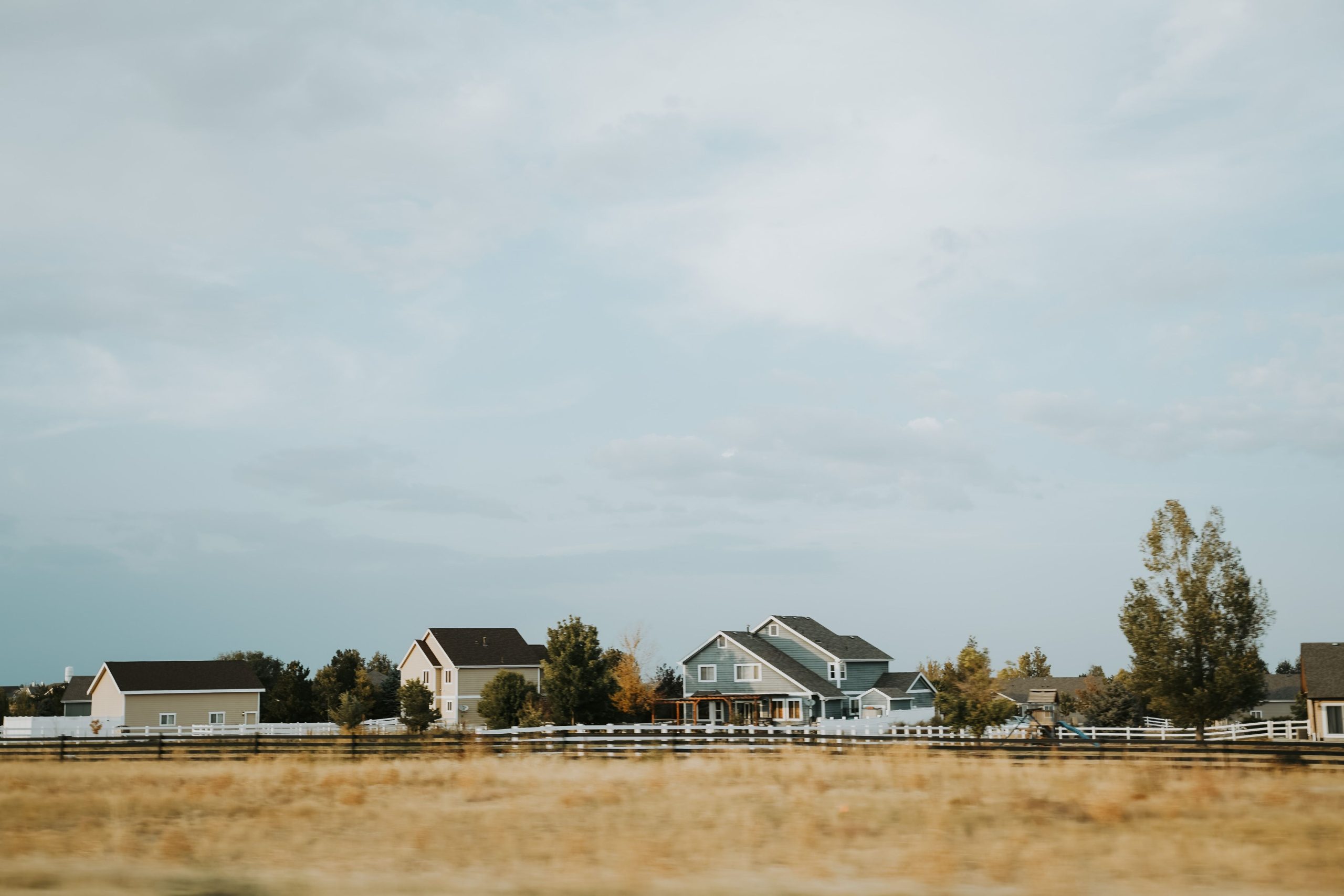
If you want to buy a home outside a big city but don’t have tens of thousands of dollars saved for a down payment, a USDA home loan may be the most affordable mortgage available to you. Backed by the U.S. Department of Agriculture, these loans let eligible buyers finance 100% of a home’s price in designated rural and suburban areas — no down payment required.
The catch is that USDA loans come with rules that other mortgages don’t: limits on household income, restrictions on where the home can be, and standards for the property itself. This guide explains exactly how to qualify for USDA home loans in 2026, including the newest income limits, credit and debt requirements, fees, and a step-by-step application process.
What Is a USDA Home Loan?
A USDA home loan is a mortgage offered through the USDA Rural Development Single Family Housing program, often called the Section 502 program. Its purpose is to help low- and moderate-income households buy safe, modest homes in rural communities.
There are two main types:
1. USDA Guaranteed Loan (Section 502 Guaranteed)
This is the most common option. You apply through a USDA-approved private lender — a bank, credit union, or mortgage company — and the USDA guarantees a large portion of the loan. That guarantee lowers the lender’s risk, which is why lenders can offer zero-down financing and competitive interest rates. Guaranteed loans are designed for moderate-income households earning up to 115% of the area median income.
2. USDA Direct Loan (Section 502 Direct)
Direct loans are funded and serviced by the USDA itself. They are reserved for low- and very-low-income applicants who can’t get credit elsewhere. Direct loans may include payment assistance that can reduce the effective interest rate dramatically, and repayment terms can extend beyond 30 years. Funding is limited, and applications go through your local USDA Rural Development office rather than a private lender.
There is also a related Section 504 Home Repair program, which offers loans and grants to very-low-income owners who need to repair or modernize a home they already own.
Why Choose a USDA Loan?
Before diving into qualification rules, it helps to understand why so many rural buyers seek out this program:
- No down payment: You can finance up to 100% of the appraised value.
- Lower mortgage insurance costs: USDA’s guarantee fees are typically cheaper than FHA mortgage insurance and private mortgage insurance on low-down-payment conventional loans.
- Competitive fixed rates: Because the government backs the loan, rates are usually in line with or better than other low-down-payment options.
- Flexible credit standards: The USDA itself doesn’t set a hard minimum credit score.
- Closing cost help: Sellers can contribute toward your closing costs, and in some cases closing costs can be financed if the home appraises for more than the purchase price.
- No published maximum loan amount (Guaranteed program): Your loan size is limited by your income and ability to repay, not a fixed cap.
USDA Loan Eligibility Requirements in 2026
To qualify for a USDA home loan, you need to pass four main tests: location, income, credit/finances, and property condition. Let’s go through each one.
1. The Property Must Be in a USDA-Eligible Rural Area
This is the requirement people misunderstand most. “Rural” in USDA terms does not only mean farmland or remote countryside. Many small towns and outer suburbs of mid-sized cities qualify. Generally, eligible areas are communities outside of major metro centers with smaller populations, but the USDA makes the final determination using its own maps.
How to check: Visit the official USDA Income and Property Eligibility website (eligibility.sc.egov.usda.gov), choose the Single Family Housing Guaranteed or Direct program, and enter the property’s address. The map will tell you instantly whether the address is eligible.
Tips for the location test:
- Eligibility maps are updated periodically, so an area that qualified a few years ago may not qualify now — and vice versa. Always check the specific address.
- Homes just a few miles outside a city boundary often qualify.
- If you’re house hunting, ask your real estate agent to filter listings by USDA eligibility.
2. Your Household Income Must Be Within USDA Limits
USDA loans are meant for moderate-income families, so there is an income ceiling. For the Guaranteed program, total household income generally cannot exceed 115% of the area median income.
New 2026 income limits: On July 13, 2026, USDA issued Procedure Notice 657, publishing updated income limits for the Single-Family Housing Guaranteed Loan Program. The new standard limits that apply across most of the country are:
| Household Size | Standard 2026 Income Limit (Guaranteed Loan) |
|---|---|
| 1–4 people | $122,800 |
| 5–8 people | $162,100 |
These standard limits rose from the previous figures of $119,850 (1–4 people) and $158,250 (5–8 people). In higher-cost areas, the limits are significantly higher. For example, some counties and metro areas in Colorado, Connecticut, and California have limits well above the standard figures. For households larger than eight people, USDA adds 8% of the four-person limit for each additional person.
Important: USDA counts household income, not just borrower income. This is a key difference from other loans. The income of every adult living in the home generally counts toward the limit, even if that person is not on the mortgage. For example, if a working adult child or a relative with income lives with you, their earnings may be included.
Deductions can help you qualify. USDA uses “adjusted annual income,” which allows certain deductions from gross household income, such as:
- A deduction for each dependent child under 18, and for full-time students or household members with disabilities
- Qualifying childcare expenses for children age 12 and under
- A deduction for elderly households (where the head of household or spouse is 62 or older, or disabled)
- Certain unreimbursed medical expenses for elderly or disabled household members
These deductions can bring a household that appears slightly over the limit back within eligibility. Use the “Income Eligibility” calculator on the USDA eligibility website or ask your lender to run the numbers.
Direct Loan limits are lower. For the Section 502 Direct program, applicants must fall into the low-income (generally up to 80% of area median income) or very-low-income categories, and the home must fall under area-specific loan limits.
3. You Must Meet Credit Requirements
The USDA doesn’t impose a fixed minimum credit score. However, most USDA-approved lenders look for a credit score of 640 or higher. Here’s why that number matters:
- Applications are run through USDA’s Guaranteed Underwriting System (GUS). Borrowers with scores of 640+ typically get streamlined processing with less documentation.
- Borrowers below 640 may still qualify, but their file will usually need manual underwriting, which involves a closer review of credit history and stronger compensating factors.
- Some lenders add their own “overlays,” setting minimums higher than USDA guidelines. If one lender turns you down, another may approve you.
Lenders also review your overall credit history. Recent late payments, collections, bankruptcies, or foreclosures can affect eligibility, and waiting periods apply after major credit events. If you have little or no traditional credit, USDA allows non-traditional credit — such as rent, utility, and insurance payment history — in certain situations.
4. Your Debt-to-Income Ratio Must Be Manageable
Lenders want to see that you can comfortably afford your new mortgage. USDA guidelines generally look for:
- Housing ratio of about 29%: Your total monthly housing payment (principal, interest, taxes, insurance, and the USDA annual fee) should be around 29% of your gross monthly income or less.
- Total debt ratio of about 41%: All monthly debts combined — mortgage, car loans, student loans, credit cards — should be around 41% of gross monthly income or less.
Borrowers with strong credit, savings, or stable job history may be approved with higher ratios through GUS.
5. You Need Stable, Dependable Income
Lenders typically want to see a reliable income history, usually covering the past two years. This doesn’t necessarily mean two years at the same job — but gaps and frequent changes in income type will be examined. Self-employed borrowers, seasonal workers, and farm workers can qualify but usually need to provide tax returns and additional documentation to prove consistent earnings.
6. Citizenship and Occupancy Rules
To qualify, you generally must be a U.S. citizen, U.S. non-citizen national, or qualified alien (such as a lawful permanent resident) with eligible status.
You must also:
- Live in the home as your primary residence. USDA loans cannot be used for vacation homes, rental properties, or investment purchases.
- Not currently own adequate housing nearby. Repeat buyers can use the program, but generally not if they already own a home in decent, safe, and sanitary condition within reasonable commuting distance.
- Not be suspended or debarred from participating in federal programs.
USDA Property Requirements
Even if you and the location qualify, the home itself must meet USDA standards. The property should be:
- Modest in size and design for the area
- A single-family home, an approved condominium, or a qualifying new manufactured home that is permanently affixed to a foundation and meets HUD code
- Safe, sound, and sanitary, with working utilities, adequate water and sewage systems, and good access by road
- Not used primarily to produce income — for example, a working farm or a property with a large commercial component won’t qualify
A USDA appraisal confirms both the home’s market value and that it meets program standards. If the home needs significant repairs, the deal may stall. Homes that need heavy renovation may be better suited to a renovation loan such as the FHA 203(k).
What Does a USDA Loan Cost?
USDA loans don’t have traditional mortgage insurance. Instead, Guaranteed loans include two fees:
- Upfront guarantee fee: 1% of the loan amount. This can be rolled into the loan rather than paid in cash at closing.
- Annual fee: 0.35% of the outstanding loan balance. This is split into monthly payments and included in your mortgage payment. It is recalculated each year as your balance decreases and lasts for the life of the loan.
Example: On a $250,000 loan, the upfront fee would be $2,500, and the annual fee in the first year would be about $875 — roughly $73 per month.
You’ll also pay standard closing costs, such as appraisal, title, origination, and recording fees. Sellers may contribute toward these costs, which can significantly reduce the cash you need at closing.
Step-by-Step: How to Apply for a USDA Home Loan
Step 1: Check Property and Income Eligibility
Start on the USDA eligibility website. Use the property map to confirm that areas you’re interested in qualify, and use the income calculator to estimate your adjusted household income against your county’s limit.
Step 2: Review and Strengthen Your Credit
Pull your credit reports from all three bureaus and dispute any errors. Pay down credit card balances, avoid new debt, and make every payment on time in the months before applying. Getting your score to 640 or above will make the process smoother.
Step 3: Find a USDA-Approved Lender
For a Guaranteed loan, you’ll need a lender that participates in the USDA program. Not every lender offers USDA loans, so ask directly. Compare interest rates, lender fees, and credit score requirements from at least two or three lenders. For a Direct loan, contact your local USDA Rural Development office.
Step 4: Get Pre-Qualified or Pre-Approved
Your lender will review your income, assets, debts, and credit to estimate how much you can borrow. A pre-approval letter makes your offer more competitive when you find a home.
Step 5: Gather Your Documents
Lenders typically ask for:
- Government-issued photo ID
- Recent pay stubs (usually 30 days)
- W-2s and federal tax returns for the past two years
- Bank statements for the past two months
- Documentation of other income (Social Security, child support, pension, etc.)
- Information about all adult household members’ income
- Records of childcare or medical expenses if you’re claiming deductions
Step 6: Find an Eligible Home and Make an Offer
Work with a real estate agent familiar with USDA loans. Before signing a contract, confirm the address is in an eligible area. Consider asking the seller to cover part of your closing costs as part of your offer.
Step 7: Appraisal and Underwriting
After your offer is accepted, the lender orders a USDA appraisal and underwrites your file. Respond quickly to any requests for additional documents to avoid delays.
Step 8: USDA Review and Closing
Unlike most mortgages, a Guaranteed loan requires a final review by USDA Rural Development before the loan can close. Once the USDA issues its conditional commitment, the lender schedules closing. This extra step means USDA loans can take a little longer than conventional loans, so plan your timeline accordingly.
Common Reasons USDA Applications Are Denied
Knowing what can derail your application helps you avoid surprises:
- The property is outside an eligible area — always verify the exact address.
- Household income is over the limit — often because of an adult household member’s income the borrower didn’t account for.
- Debt-to-income ratio is too high
- Recent credit problems, such as late payments or collections
- The home fails USDA property standards during the appraisal
- The buyer intends to use the home as a rental or second home
Tips to Improve Your Chances of Approval
- Look at neighboring towns and counties. Eligibility and income limits change by location, and a home a few miles away might qualify.
- Claim every allowable deduction. Dependent, childcare, and elderly household deductions can lower your adjusted income.
- Reduce your debts before applying. Paying off a car loan or credit card can improve your DTI ratio.
- Build a cash cushion. Even though no down payment is required, savings act as a compensating factor and help with closing costs and moving expenses.
- Shop multiple lenders. Lender overlays vary, so a denial from one lender isn’t the final word.
- Check limits each year. USDA updates income limits annually, so if you were over the limit before, you may qualify now.
USDA Loan vs. FHA vs. Conventional: Quick Comparison
| Feature | USDA Guaranteed | FHA | Conventional |
|---|---|---|---|
| Minimum down payment | 0% | 3.5% | 3% (typically) |
| Typical credit score | 640 (lender standard) | 580 for 3.5% down | 620 |
| Income limits | Yes | No | No (except some programs) |
| Location restrictions | Yes – eligible rural areas | No | No |
| Mortgage insurance | 1% upfront + 0.35% annually | Upfront + annual MIP | PMI if under 20% down |
If you live in an eligible area and fall under the income limit, a USDA loan is often the lowest-cost path to homeownership. If you don’t meet the location or income tests, an FHA or conventional loan may be a better fit.
Frequently Asked Questions
What credit score do I need to qualify for a USDA home loan?
USDA doesn’t set an official minimum, but most lenders require a score of at least 640 for streamlined approval through GUS. Lower scores may be considered with manual underwriting and strong compensating factors.
What is the USDA income limit for 2026?
For the Guaranteed program, the standard 2026 limits that apply in most areas are $122,800 for households of 1–4 people and $162,100 for households of 5–8 people. Limits are higher in many higher-cost counties. Check your exact county on the USDA eligibility website.
Can first-time and repeat buyers use USDA loans?
Yes. You don’t have to be a first-time buyer. However, you generally can’t already own adequate housing within commuting distance of the new home.
Is there a maximum USDA loan amount?
The Guaranteed program has no fixed loan limit. The amount you can borrow depends on your income, debts, and ability to repay. Direct loans do have area-specific loan limits.
Can I use a USDA loan to buy a farm or rental property?
No. USDA home loans are for primary residences only. Income-producing properties such as working farms or rentals don’t qualify.
How long does it take to close a USDA loan?
Because the USDA reviews each Guaranteed loan after the lender approves it, closing can take somewhat longer than a conventional loan. Timelines vary by lender and by the workload at your state’s Rural Development office.
Final Thoughts
Qualifying for a USDA home loan comes down to four essentials: buying in an eligible rural area, keeping household income under the local limit, maintaining solid credit and manageable debt, and choosing a home that meets USDA standards. With the 2026 income limits now higher than last year, more families than ever may be eligible for zero-down financing.
Your best first step is simple: check your target address and household income on the official USDA eligibility website, then speak with at least two USDA-approved lenders to compare offers. With preparation, a USDA loan can make owning a home in rural America far more affordable than you might expect.