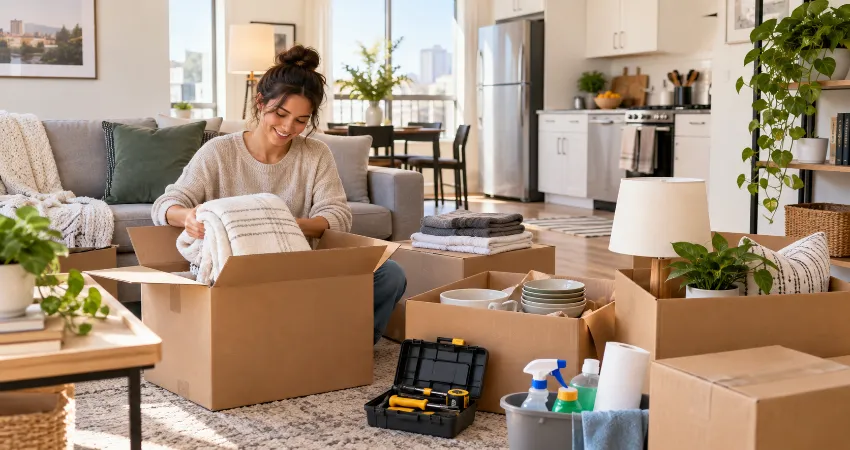
Moving into your first apartment is exciting, but it can also feel surprisingly complicated. You are not simply moving furniture into a new space. You are taking responsibility for rent payments, utilities, household supplies, safety, maintenance requests, insurance, and dozens of small details that may never have mattered when you lived with family, roommates, or in student housing.
The most useful first apartment checklist is not a giant shopping list. A smarter approach is to handle the things that protect your money, safety, and tenancy first, then purchase household items based on how you actually live. This helps new renters avoid unnecessary spending while making sure important move-in tasks are completed before problems appear.
This guide covers the essential steps new renters in the USA should complete before moving in, on move-in day, and during the first few weeks in their new apartment.
Read Your Lease Before Moving In
Your lease should be the starting point for your apartment checklist. Read the entire document instead of focusing only on the monthly rent. Pay attention to the rent due date, late payment rules, security deposit terms, lease length, renewal requirements, utility responsibilities, parking rules, guest policies, pet rules, maintenance procedures, and restrictions on modifying the apartment.
Keep a digital copy of your signed lease somewhere you can access easily. Rental laws and tenant protections can differ between states and cities, so do not assume that a rule you heard about in another state applies to your apartment. When a lease term seems unclear, ask the landlord or property manager for clarification in writing.
Complete a Detailed Move-In Inspection
Before unpacking, carefully inspect every room. Check walls, ceilings, flooring, doors, windows, cabinets, countertops, appliances, plumbing fixtures, electrical outlets, lights, locks, and other visible features. Record scratches, stains, cracks, damaged blinds, leaking faucets, broken fixtures, or anything else that existed before you moved in.
Take clear photos and short videos with your phone and keep the original files. If your landlord provides a move-in condition form, complete it carefully and return it within the required period. HUD materials use move-in and move-out inspection forms specifically to document apartment condition. Good documentation can be extremely useful later when determining whether damage occurred during your tenancy or existed beforehand.
Test Essential Safety Features
Safety checks should happen before decorating or shopping for furniture. Test the smoke alarms using their test buttons and identify every available exit. The U.S. Fire Administration recommends smoke alarms in sleeping rooms, outside separate sleeping areas, and on every level of a home. Renters should report missing or malfunctioning alarms to the landlord or property manager.
🔥 Don’t Miss These Opportunities


Locate fire exits and stairways if you live in a larger apartment building. Make sure windows and doors that may be needed during an emergency are accessible. If the apartment contains carbon monoxide alarms, verify that they appear functional as well. Never disable an alarm because it becomes inconvenient.
Set Up Utilities and Essential Services
Determine which services are included in your rent and which ones must be opened in your name. Depending on the apartment, you may need electricity, natural gas, water, internet, trash service, or other utilities.
Schedule service activation early enough that electricity and other essential services are available when you arrive. Keep confirmation numbers and your first bills so you can verify that your service began on the correct date. Also learn where packages and regular mail are delivered and how residents access the mailbox or package area.
Consider Renters Insurance
Many first-time renters mistakenly assume the property owner’s insurance automatically protects their belongings. It generally protects the building rather than everything a tenant owns. Renters insurance can provide personal property coverage, liability protection, and, depending on the policy, additional living expense coverage when a covered event makes the apartment temporarily uninhabitable.
Review coverage limits, exclusions, deductibles, and whether the policy pays replacement cost or actual cash value. Your lease may also require renters insurance, so confirm the requirements before purchasing coverage.
Prepare Your First Apartment Kitchen
A functional kitchen does not require an expensive collection of matching cookware. Start with what you will genuinely use: a frying pan, saucepan, basic cooking utensils, cutting board, kitchen knife, plates, bowls, cups, silverware, food storage containers, dish soap, sponge, dish towels, trash bags, and a trash can.
Add appliances gradually. Your apartment may already include a refrigerator, stove, microwave, or dishwasher. Living in the apartment for several weeks often reveals what you actually need better than purchasing everything before moving.
Stock the Bathroom With Essentials
The bathroom should be ready before your first night. Bring toilet paper, towels, hand soap, shower supplies, a shower curtain and rings if the unit requires them, a bath mat, toilet brush, plunger, and basic cleaning supplies.
Check underneath sinks, around the toilet, and near the bathtub or shower for moisture. The EPA advises renters to report plumbing leaks and moisture problems promptly because controlling moisture is an important part of preventing mold growth.
Set Up Your Bedroom for the First Night
Your bedroom does not need to be completely furnished immediately, but you should have a comfortable place to sleep. Prioritize a mattress, bedding, pillows, window coverings where needed, clothing storage, and a bedside light.
Measure the room before purchasing large furniture. Apartment bedrooms can be smaller than they appear in listing photographs, and doors, closets, heating units, outlets, and windows can reduce usable wall space.
Buy Basic Cleaning and Maintenance Supplies
Keeping a rental clean is easier when basic supplies are available from the beginning. Useful items include an all-purpose cleaner, disinfecting products, microfiber cloths, broom, dustpan, vacuum when appropriate, mop, laundry detergent, paper towels, rubber gloves, and trash bags.
A small household toolkit is also useful. Consider a screwdriver set, measuring tape, flashlight, scissors, adjustable wrench, and a few basic tools. Before drilling holes, painting walls, installing shelves, or making other alterations, check what your lease allows.
Create a First Apartment Emergency Kit
Every apartment should have a small collection of emergency supplies. Keep flashlights, spare batteries, a basic first-aid kit, emergency contact information, phone charging options, and a modest supply of drinking water and shelf-stable food.
Know the address of your apartment well enough to provide it quickly during an emergency. If you live in a multi-unit building, learn your apartment number, building entrance, stair locations, and evacuation route.
Document Your Belongings
Create a simple home inventory after unpacking. Photograph valuable electronics, furniture, appliances you own, and other significant belongings. Keep receipts or purchase records for expensive items when practical.
This inventory can help you estimate how much personal property coverage you need and may make documentation easier if you eventually have to make an insurance claim. Update the inventory when you purchase valuable new items.
Update Your Address and Important Accounts
Once the move is confirmed, update your mailing address with organizations that need it. This may include financial institutions, employers, insurance providers, subscription services, government agencies, and other important accounts.
You can also use the official USPS change-of-address process when appropriate. Do not rely indefinitely on forwarded mail. Updating important accounts directly helps reduce the chance that sensitive correspondence continues going to an old address.
Create a Realistic Monthly Apartment Budget
Rent is only part of the monthly cost of living independently. Your budget may also include electricity, gas, internet, renters insurance, parking, transportation, groceries, laundry, household supplies, and other recurring expenses.
During your first two or three months, track actual expenses instead of relying entirely on estimates. Utility costs and household spending can become clearer after you have lived through several billing cycles.
Prioritize Purchases Instead of Furnishing Everything Immediately
One of the most common first-apartment mistakes is trying to make the space look finished immediately. Essential items should come first. Decorative furniture, extra kitchen equipment, storage accessories, artwork, and other nonessential purchases can wait.
A useful rule is to live in the apartment before solving every imagined problem. After several weeks, you may discover that you need extra lighting more than another chair, additional storage more than decorations, or a small dining setup instead of a large table.
FAQs About First Apartments
1. What should I buy first for my first apartment?
Start with items needed for sleeping, bathing, eating, cleaning, and basic safety. Bedding, towels, toilet paper, basic cookware, dishes, cleaning products, trash bags, lighting, and a few tools usually matter more during the first days than decorative furniture. Purchase optional items after you understand how you use the apartment.
2. What should I inspect before moving into an apartment?
Inspect floors, walls, ceilings, windows, doors, locks, cabinets, plumbing, appliances, outlets, lights, smoke alarms, and visible fixtures. Photograph existing damage and submit required condition documentation to management. This creates a record of the apartment’s condition when your tenancy begins.
3. Should I take pictures of my apartment before unpacking?
Yes. Photos and videos taken before furniture and personal belongings enter the apartment provide a clearer record of existing conditions. Capture close-up images of damage as well as wider photographs showing where each issue is located.
4. Do first-time renters need renters insurance?
Renters insurance is worth considering because a landlord’s property coverage generally does not insure a tenant’s personal belongings. Policies can also include personal liability coverage and additional living expense protection. Some leases require coverage, so check your agreement and compare policy details carefully.
5. How much furniture should I buy before moving?
Usually less than you think. Begin with essential sleeping, seating, eating, and storage needs. Measure every room and doorway before ordering larger furniture. Waiting a few weeks before buying optional pieces can prevent purchases that are too large or unnecessary.
6. Which documents should renters keep?
Keep your signed lease, payment records, deposit documentation, move-in inspection report, photographs, maintenance communications, insurance information, utility confirmations, and important correspondence with management. Digital copies stored securely can make these records easier to retrieve when needed.
7. What should I do if I find damage after moving in?
Document the issue immediately with photographs and notify your landlord or property manager through the maintenance procedure described in your lease. For significant problems, written communication creates a useful record showing when the issue was discovered and reported.
8. How can I avoid overspending on my first apartment?
Separate necessities from convenience items and decorations. Buy enough to function comfortably, then add things after identifying genuine needs. Used furniture, existing household items, and gradual purchases can also reduce the large upfront expense associated with moving.
9. What monthly expenses should a new renter expect besides rent?
Common expenses can include electricity, gas, internet, water, parking, renters insurance, laundry, groceries, transportation, and household supplies. What you pay depends heavily on your lease, building, location, and lifestyle, so review which services are already included before building your budget.
10. What is the most important thing to do on move-in day?
Before becoming focused on boxes and furniture, document the apartment’s condition and verify basic safety. Check locks, alarms, plumbing, appliances, utilities, and visible damage. Completing these tasks while the apartment is still empty gives you a clear starting record and allows urgent problems to be reported quickly.
Conclusion
A first apartment becomes much easier to manage when you prioritize responsibilities instead of trying to purchase everything at once. Read the lease, document the unit, verify safety features, organize utilities and insurance, prepare basic household essentials, and maintain good records from the beginning. Once those foundations are in place, you can furnish and personalize your apartment gradually based on your actual needs, budget, and lifestyle.